Thursday, November 18, 2010

Intoxicating Vanilla

One of my favorite childhood memories was watching my mother bake. And perhaps even more enjoyable were the scents that wafted out of the kitchen. Sometimes my mom allowed one of us kids to help her with some simple task, such as pouring a spoonful or two of vanilla extract into whatever batter she was mixing.

Even as a child, the scent of that vanilla was intoxicating. The simple act of unscrewing the cap on the dark brown bottle released its heady perfume. I’d been tempted to drink the stuff, so appealing was its smell, but either my mother talked me out of it or I was suspicious of its dark, syrup-like appearance.

These days, I’m still tempted to drink the stuff—or to eat a vanilla bean whole—but I no longer find the stuff suspect whether it’s in solid or liquid form. All that matters is that it be pure.

Like so many other things, Americans are discovering that pure foods have more flavor than their artificial counterparts. Some years ago, many a prudent baker might have eschewed pricey pure vanilla for its cheaper, imitation counterpart. Well, not any longer.

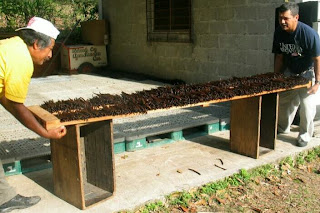
And there are options available today that weren’t widely available even a dozen years ago. When I was a kid, only vanilla extract was available. Currently, you can find dried beans from any of the four spots vanilla is grown: Mexico, Madagascar, Indonesia and Tahiti. Vanilla from the former two is considered superior, while that from the latter two is generally weaker in flavor and fruitier. For an aromatic and flavor-packed addition to a dessert, whole beans can be shaved or ground over ice cream, cake, fruit or added to whipped cream for an aromatic and flavorful addition.

The story of vanilla reads like an epic novel, with idiosyncratic aristocrats, an enterprising slave, bandits, tycoons, Aztec kings and simple farmers. Vanilla, which originated in Mexico, is grown successfully in only a few areas of the world. Produced from the dried pods of a flowering orchid vine, vanilla is as difficult to cultivate as it is tasty. For an enlightening read on the history of vanilla, check out Tim Ecott’s Vanilla.

If you’d like to get some pure vanilla extract or beans, you can find them at many grocery stores. And some of the premium extracts, such as Nielsen-Massey’s (one of the largest purveyors of pure vanilla and located in suburban Chicago) can be found at Williams-Sonoma or on-line. Another good source is the Spice House or many Whole Foods locations.

While vanilla is one of the priciest flavorings in the world, most people involved in the business of growing, buying and selling the beans aren’t making much money. One of the reasons vanilla is so costly is because each flower must be hand pollinated, a tedious and intensive task which is largely performed by farmers who live a simple existence. It’s the painstaking process of growing, drying and shipping this extraordinary, flavorful bean that makes it so expensive—but ultimately worth it.

Photos Courtesy Vanilla-Trade


Monday, August 23, 2010

Want the Largest Farmer's Market in America? Head to Madison.

Most people think the largest farmer’s market is somewhere in California. Or perhaps New York City. But it’s not.

The largest farmer’s market sits in the center of the country, smack dab in the middle of one of its most interesting cities: Madison, Wisconsin.

And the setting actually makes sense because the Dane County Farmer’s Market is surrounded by the largest concentration of organic farms in the country which means there’s plenty of tasty produce and food products from which to choose.

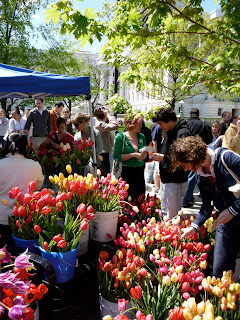
But small scale and organic farmers aren’t the only vendors filling the wide sidewalks that circle Wisconsin’s towering capitol building (which is just a few feet shorter than the U.S. Capitol after which it was modeled). Hmong and Swedish farmers, venison and grass-fed beef vendors, and dozens of other food producers fill the block.

Held on Saturdays from April through November (when it’s much reduced in size and moves indoors), the market boasts over 300 vendors, with around 150 participating during the weekly market.

Farmers markets have become so trendy that some less authentic versions and, well, unsavory vendors have gotten into the game. (Telltale signs?—bananas, out of season fruits and veggies, or perfectly packaged items.) Thankfully, Madison’s farmer’s market prohibits re-selling. If it’s for sale at the market, then it was grown or made in Wisconsin.

Market days resemble a giant outdoor party more than a market. Corn on the cob, tacos, pad thai, gyros, and many other prepared foods can be purchased from food carts. Sometimes there’s even beer (this is Wisconsin, after all.)

While foodies might swoon or stumble given the incredible array of fresh produce, flowers and locally-crafted food, they just need to be sure to follow one rule: move counter-clockwise.

That’s right. Given the enormous flow of pedestrian traffic at this mega-market, everyone walks around the Capitol Square in a counter-clockwise direction.

Sunday, June 27, 2010

The Rift Valley’s Otherworldly Soda Lakes: Recreating an Out of Africa Experience

There’s a singular moment in the mid 80’s movie Out of Africa that’s always stuck with me. I'm not certain if Karen Blixen ever really did it, if she and Denys Finch Hatton flew a small plane over a shallow African lake thronged with brilliant pink flamingos, but this memorable bit of moviemaking made me hunger for a similar experience.

On my first trip to Kenya, I vowed to duplicate the trip. But with little time and no idea how to arrange such a trip, I had to rely on memories of the movie and my imagination.

On my second trip, though, my cousin Dan arranged for a plane to fly friends and me to the lake—though he made it clear that he found the movie sappy and stupid.

Lakes Bogoria and Nakuru—shallow soda lakes that serve as a wading pool for literally millions of lesser and greater pink flamingos—sit in the middle of the Great Rift Valley, the birthplace of man that cuts vertically and deeply across eastern Africa. The lakes can be reached via treacherous “roads” from Nairobi, but for purposes of recreating the movie scene, I needed to visit via plane.

In this former British colony, pilots for hire are seemingly as plentiful as wildebeests on the Serengeti. The country’s pilots are part Han Solo, part Indiana Jones. Some will take you on a deluxe tour, a roller coaster ride in the sky, with the great plains, Rift Valley, or coastal beaches of Kenya spread beneath you. I was interested in doing a flyover of Lake Bogoria, where the locals told me that upwards of two million flamingos were congregating and feeding on the abundant algae that grow in the alkaline-rich soda lakes. (It’s funny how Kenyans seem to know about these things: the weather on the coast, whether elephants are around and in which lake the highly social flamingos are congregating).

Dan made arrangements with a Tropic Air pilot named Buddy who was of broad grin, leathery skin, and a winning beer gut that barely fit beneath the plane's steering wheel.

Immediately after take-off, Buddy banked the plane and we passed directly over a perturbed herd of dusty elephants which pointed their trunks toward the sky. Instead of gaining altitude, we stayed low to the ground—probably between 50 and 100 feet. Heading west across grassy, acacia-dotted plains, I watched small herds of goats scatter. Zebra, giraffe, impala and ostrich raced across the grasslands below, stirring up clouds of red dust.

The windows remained open, allowing the grassy rich smell of the equatorial highlands to sweep through the plane.

Buddy steered the plane into a near dive as we head into a deep, narrow gorge that took us all the way down to the bottom of the Rift. I feared for my life, wondering if one of the strong currents racing down the gorge would smash us into one of the rock walls, but he rode the waves as if he were surfing.

Nothing prepared me for my first glimpse of Lake Bogoria. At first, the light-colored band along the edges nearest appeared to be beaches, but as we flew closer, small bands of white along the lakeshore became large swaths of pulsating, flying and wading pink birds.

In every direction there was activity. Birds wading, birds swimming, birds flying toward the center of the lake, birds flying toward shore, birds congregating on shore and birds scurrying in all directions—all a vibrant pink that contrasted sharply with the bleached out, dun color of the desert-like, volcanic ridges that cupped the lakes. Just a few million Greater and Lesser Flamingos, an occasional eagle, and our small plane—oh, and as I was to find out, some swifts.

As we glided along the shoreline, peering at the vista below, there was a sudden thud on the right wing. I waited for us to begin falling from the sky.

“Never had that happen before,” Buddy casually remarked. “That was a swift.”

Once I was assured we weren’t going to plunge to the ground, I was able to enjoy the ride again.

We followed the shore line of the cigar-shaped lake to its southern terminus and then Buddy banked the plane toward the eastern shore which was packed with more of the brightly colored birds. Here, sulfurous fumes from the springs and geysers far below crept through the cabin while rivulets of steam rose from the black volcanic rock. Flamingos flew in every direction and glided above the dark waters of the lake with wingspans that seemed as wide as our plane’s.

Flanking the lake’s eastern shore, the rocky, serrate escarpment that rises abruptly from the dark waters of Bogoria forms the arid, western extent of the mythical Aberdares (where Hemingway and the Price of Wales hunted) and resembles a lunar landscape.

We circle the lake a few times, but I never tired of watching the birds and the spectacle they created en masse: the unreal splotches of muted and dusty pink from a distance, and the constantly-moving, pulsating blobs and clusters of vibrant rose, cerise, and coral directly below us.

I struggled to compare the spectacle to something familiar, to some experience or something I’d seen somewhere. Sure it was familiar to me from the scene in Out of Africa that brought me there, after all. But as if often the case with movies, even an image projected onto a surface 35 feet wide and drenched in color can’t adequately capture the feel and look of the real thing.

You might be tempted to think of the lake as a giant bee hive—albeit occupied by giant pink, graceful birds—but, as we rode the air currents above the primeval body of water, I decided it resembled a school of tropical fish as much as the skies above a busy airport. In the end, I realized that such a spectacle of nature can’t really be compared to some fish or an airport. The lake really can’t be compared to anything at all.

When Buddy dropped my friends and me back at the airstrip, it was as if the movie had ended and the house lights had been raised. I was still trying to digest what I’d seen as the plane buzzed us before heading off to the south and Nairobi.

Though my feet were planted firmly on the red Kenyan soil, I felt as if I were still flying.

Details: Tropic Air pilots can pick you up at or near most Kenyan ranches and resorts (really, anywhere with an airstrip). http://www.tropicairkenya.com/

Sunday, June 13, 2010

Never Mind the Hype, Café Deux Magots Worth a Visit

Every city has its overrun tourist destinations. New York has the Empire State, Rome the Colosseum, and Sydney its opera house. And after these iconic sites exist a bunch of next-tier, but often similarly-overrun spots. While many travelers choose to avoid such attractions, some find enough authenticity in the spots to make them worth a visit.

Paris’ Café Deux Magots, one of the City of Light’s famous and historic cafés, is just such a place.

During a recent reading of Julia Child's biography, I was reminded of the Latin Quarter standby. Like the famous American chef, I consider the Left Bank café a favorite.

Child, who visited the café on her first Saturday in Paris, admired the morning sun striking the chimneypots of the city’s grand apartment houses while she and her husband ate buttery croissants and drank café complet.

Many tourists visit the institution for its history: Hemingway, Sartre, and hundreds of writers, artists, poets and glitterati sipped a coffee, wine or beer at one of the small wooden tables in the high ceilinged rooms indoors—under the sage gaze of two Eastern Magi statues—or al fresco at one of the even tinier sidewalk tables in traditional wicker café chairs.

Deux Magots has changed little since it opened in 1914, though its prices no longer allow for many struggling artists to visit. If you balk at paying inflated prices for breakfast, consider that your check includes entry to a historic destination as well an amusement park ride for adults. And unlike the rides at Six Flags, the experience here lasts as long as you’d like—you can sit at your table and sip your coffee or wine for twenty minutes or two hours.

And then there’s the food—the incomparable croissants and baguettes, the pastries, the eggs, but most of all, the coffee. Order it plain, as an espresso, au lait or a cappuccino and whatever you sip will rock your world.

Café-sitting in the Left Bank offers manifold pleasures. The world comes to Paris but the city seemingly could care less as its citizens ebb and flow along its streets like colorful, ever-shifting tides. Sure, you might see a movie star stroll past, but the real pleasure is observing life.

Sip a flavorful coffee and catch a glimpse of a dead ringer for Catherine Deneuve being led by three French bulldogs on the sidewalk and suddenly, eighteen euro for a continental breakfast seems a bargain.

Monday, May 31, 2010

Outdoor Dining Never Dull in Chicago


Chicagoans like to cram twelve months of outdoor living into four or five months. Is it any wonder we have so many spots to sip a drink or nosh al fresco? Here are some of my favorites (Let me know yours in the comments section below.)

For arguably the most impressive views in town (with lofty prices to match), Trump Tower’s Terrace offers close up and personal views of the upper reaches of a few of Chicago’s most famous landmarks—Tribune Tower and the Wrigley Building. Views of the river, lake and fireworks (on Wednesdays and Saturdays) aren’t bad either.

Closer to the ground, it’s tough to beat Piccolo Sogno which has one of the most verdant, idyllic dining decks anywhere. Barely out of the Loop, this fine Italian dining restaurant is hardly your typical red sauce joint. The other night I took a friend from New York City here and she was so smitten with its pastoral charms that her allegiance to her native city seemed to falter.

For a more casual Italian option, grab a table at Enoteca Roma which serves Roman style pizza, pastas and other standbys featured at traditional Eternal City eateries. Division Street, with its ultra-wide sidewalks and effervescent pedestrian scene, is an ideal setting for this casual spot which offers both an expansive café and a private courtyard in back.

For scenesters, Sushi Samba Rio’s rooftop aerie offers music, crowds, music, views and tasty, unconventional food that merges Japanese cuisine and sushi with the culinary traditions of South America.

Not to be outdone, newbie Epic boasts the largest rooftop spot in the city—and perhaps even the world. Smartly designed, cavernous rooms offer agreeable indoor spaces in which to spend some time, but the rooftop which seems as large as a football field is where the action is during the summer months.

Finally, the concrete, cacophonous sidewalk café scene at Matchbox offers perfection in a cocktail glass and plenty of urban grit. Handcrafted cocktails were a mainstay here long before the term was coined, so look for expertly mixed classics and no-nonsense bartenders.

Okay, so these are some of my favorites, what are yours?

 
Alan J. Shannon Copyright © 2020 | Home