Tuesday, May 11, 2010

Yes, Good Restaurants Do Exist in Venice

Venice has notoriously bad restaurants.

With a constant stream of day-tripping and itinerant tourists, restaurants in this storied city can serve plenty of bad food without ever having to suffer the consequences. From uninspired, greasy pizza to bland ravioli, Venetian restaurants serve up fare better suited to an Olive Garden than the Veneto.

This sad state of affairs becomes downright dismal when you consider the wealth of incredible seafood and produce available within an hour’s gondola ride in any direction.

The good news is that there are a handful of restaurants hidden down twisting viali or on side streets that serve up fare that measures up to the city’s history, architecture and charm.

Tucked in the historic shipbuilders’ quarter which sits far from tourist-thronged Piazza San Marco, Corte Sconta serves succulent seafood in a fetching setting. So one night last summer nine of my family members and I set off in search of the spot.

“With such a large party I recommend that we bring you some of each of tonight’s specials,” our server explained. “And that way you get to try some of everything.”

Following our waiter’s suggestion meant that we avoided having to agonize over which of the fresh, seasonal dishes to order. Simply put, we got them all.

Our server also suggested a local pinot grigio. After a few bottles found their way to our table and glasses of the tasty stuff were poured, a parade of dishes began to appear from the kitchen.

For starters, there were some of the sweetest, most delicately flavored clams I’ve ever tasted. After these, platters of shellfish—shrimp, langoustines, crawfish and who-knows-what—arrived.

There was risotto. And steamed spider crabs which created quite a clamor. After that—or was it before?—platters of tender tuna carpaccio flavored with balsamic landed at either end of our table. Somewhere in the mix there was polenta, too. At least I think so. To tell the truth, I sort of lost track of all the different items that came and went.

Imagine our surprise, then—after this surfeit of seafood—when platters of freshly-roasted and sautéed fish showed up. Large platters.

We were all full, not to mention satisfied, but none of us could bear to see the beautiful fish wasted or to miss out on tasting what was meant to be the highlight of the dinner. And while it nearly hurt me, I tried each of the three different fish that were offered, and each was tender, fresh and full of flavor.

Corte Sconta would likely be popular if it served even average food. From the simple charms of the dining room to the elegantly subdued feel of the courtyard, the restaurant is as visually appealing as the city that surrounds it.

But most important, the restaurant offers food and an experience that’s as impressive and unique as the city itself.

Reservations are essential. In high season, call at least a few weeks in advance. For other restaurants in Italy with a traditional approach to dining, click here.

Trattoria Corte Sconta
Castello 3886, Calle del Pestrin (Arsenale)
Venezia, Italia
tel 0415227024 fax 0415227513
corte.sconta@yahoo.it

Tuesday, May 4, 2010

RIP, Maple Tree Inn's Convivial Charlie Orr


RIP, Charlie Orr, a Chicago treasure. This is a piece I wrote for the Sun-Times Group's Elite Magazine in April 2009.
Convivial Cajun from a Culinary Artist: Charlie Orr’s Maple Tree Inn
In Japan, if a citizen makes an especially important contribution to society or culture, that citizen is often designated a national living treasure. It’s a pity that America—and Chicago, in particular—doesn’t designate our own cultural and culinary gems as civic treasures because we’ve been blessed with so many.
In our neck of the woods, an easy inductee would be Charlie Orr whose Maple Tree Inn has been serving up sublime, full-flavored Cajun food for over 30 years. The effusive, jovial Orr is like a pied piper of good eating and good living, leading his family, friends and fans of the restaurant along a bucolic path of savory delights. A bon vivant, Orr appears to derive as much pleasure from cooking, eating and living as he does sharing his joy and inspiring others.
So how did a Chicago native begin cooking Cajun food so many miles from its origins in Louisiana’s bayous and the quaint rues of New Orleans—and this years before Paul Prudhomme and other Big Easy chefs made the cuisine as seemingly familiar to Americans as hot dogs?
The story is as meandering and full of happenstance as the Louisiana bayous themselves.
In 1975, Orr decided to take over a restaurant at 107th and Western. For five years, the self-trained chef and restaurateur played hopscotch across an imaginary culinary map of the world, with stops in southern and northern Italy, France and different spots in our own country. While experimenting with different cuisines and learning how to cook via videotaped shows of Julia Childs and trial and error, Orr finally stumbled on the cuisine for which he had an affinity.
Suffering the morning after a New Year’s Eve celebration, Orr wanted to find some menudo, Mexico’s unofficial hangover cure. Instead, he heard local TV reporter Warner Saunders mention red eye gravy which intrigued him. Venturing to the local library, he was pointed to a cookbook of classic Louisiana recipes by a helpful librarian who looked at him with a sly grin, he explains.
“What’s a big white guy like you want with a recipe for red eye gravy?” the librarian, who happened to be a Mississippi native, asked.
Little did she realize the instrumental role she would play in helping Orr find his raison d'être. Orr claims he read the cookbook in about four hours, turning to his wife when he’d finished.
“I think I found it,” he told her. “What I’ve been looking for.”
And within two weeks, Maple Tree Inn was serving Cajun food.
From gumbo to blackened chicken, the restaurant’s menu grew, ebbing and flowing as Orr explored and experimented. A Renaissance man, the novice Cajun chef endlessly digested experiences (oftentimes literally) and information which were ultimately used in the restaurant. Travels to southern France a few decades ago resulted in the creation of fixed price menus, while years worth of restaurant reviews by William Grimes of the New York Times emphasized the importance of customer service.
Currently, Orr keeps abreast of dining trends, incorporating many of his discoveries onto the menu, but giving them a decidedly Cajun spin. Pork belly, a recently popular “rediscovered” food which appears on many a Chicago restaurant’s menu, is spice-rubbed, while the Italian classic arancini, basically petite rice balls stuffed with cheese or meat, are created with etoufee risotto and crawfish. Shanks from small pigs are brined, smoked, and served plain or with a barbeque sauce glaze.
The tireless chef continues to create new dishes. Though he’s been improvising, creating and perfecting food for thirty-four years, the now full-blown, seasoned Cajun chef hungers to create the next perfect dish. Recently Orr has been working on a stuffed pork belly filled with sausage meat and creole spices. Having tried numerous versions of the dish, the perfectionist still hasn’t nailed it. But he’s in no hurry.
“It’s getting closer,” he explains. “But I’m not frantic. What we’re doing now is good.”
Maple Tree Inn has its so-called critics. The menu is ever evolving, so a sublime dish a diner experiences on one visit may not be prepared again for a year—or ever. And the restaurant is unforgiving when it comes to diners discovering that Cajun food can be flavored with unfamiliar spices or be just too hot: refunds or re-orders for either of these reasons are generally a no-go. Ever reasonable, Orr offers a compromise.
“I encourage diners to try a dish if they’re not sure. We always offer a taste.” But once a diner orders a dish, it’s theirs (unless, of course, the dish was not properly prepared—a rarity at the institution).
Orr’s passion for food is duplicated or at least mirrored when it comes to eating’s perfect and essential complement, drinking. Beer is probably as essential to Cajun food as spice, and spicy food very nearly demands a refreshing beer to cleanse, sooth and invigorate the palate. And so it is that the Inn offers an impressive 26 beers on tap, and nary a one from the big name brewers which the outspoken chef refers to as, well, something to do with a horse…
While the Maple Tree Inn emphasizes beer over wine, it does offer some special cocktails, such as a not-so traditional New Orleans hurricane made with real juices (and not a mix), a Creole Voodoo Zombie concocted with juices and three rums, and a madras mixed with mango rum, and orange and cranberry juices. A decent selection of well-priced wines is also available.
Orr also carries a social conscience into his restaurant, serving fair trade coffee and using many pure or all-natural products.
“It’s been a labor of love,” he says of his 34 years of cooking and hosting satisfied diners at the Maple Tree Inn.
Responding to an article he’d read that revealed that eighty percent of Americans don’t like their jobs, Orr marvels. Waxing philosophical with shades of the political, Orr theorizes that “if more people did the jobs they love to do, the country wouldn’t be in the shape it’s in.”
To him, making money isn’t the point. “I’m happy and content…it was never about the money.”
Does the current recession worry Orr, who is watching as other restaurants struggle with their bottom lines? Not really. The upbeat, restaurateur has created a number of recession-busting meals.
The first? An old fashioned Blue Plate special. Served on Wednesday and Thursday nights, the $14.95 special includes a choice of soup (Cajun or seafood gumbo or shrimp bisque), one of two entrées (which vary), peanut slaw, smothered okra and bread pudding with whiskey sauce. On the same nights, the restaurant offers BBQ ribs and fries for a mere $12.95 (dine in, only). And then there’s the French-inspired, nightly $22 fixed price meal of an appetizer, an entrée, and a dessert.
“I want to make it easy for people to save a couple bucks and eat out,” he says.
Visitors to the restaurant are likely to see the jovial chef who likes to check in with his customers—albeit for brief moments and only when the kitchen experiences a lull.
“I’ve always believed you have to get out and see people,” he insists. “You can’t stay holed up in kitchen.”
Orr can’t stress enough what to him is the most important aspect of his life’s passion and pastime.
“The big goal is to make sure when someone walks through the door that they know we’re happy they decided to dine here.”
And whether you talk to Orr over the phone or over a table full of Cajun food, or you never even meet him but simply channel him through his well-executed Louisiana cuisine, you’ll undoubtedly feel wanted—and want to return. And you won’t be alone. After all, the Maple Tree Inn hasn’t opened its doors to Chicago metro area residents for 34 years without serving top-notch food and making diners feel welcome.
“It’s a passion,” Orr reminds me.
But I’d already figured that out.

Sunday, May 2, 2010

Chicago's Nightwood Rocks

I can’t decide which is more impressive at Chicago’s Nightwood—the food or the woodwork. Seriously, I haven’t seen such impressive millwork since touring a Venetian palace last summer. From coffered ceilings to paneled walls in the bathrooms, this Pilsen restaurant not so subtly celebrates craftsmen—and that’s before you’ve even encountered the farm-centric menu and its celebration of food artisans both near and far.

Thankfully, the same level of attention is paid to food and drink as was devoted to the restaurant’s design.

Case in point: a stellar and thoughtful cocktail menu which shouldn’t be overlooked. For starters, the boozy American Beauty is made pretty by Hendricks gin, chartreuse, lemon and prosecco and the outstanding signature Old Fashioned is fueled by Bulleit bourbon, burnt orange syrup, brandied cherries and Wisconsin bitters.

I come from a well-established line of finicky Old Fashioned drinkers, so I can be a bit particular about this cocktail. I had no cause to be concerned, though, as the version here was lip-smacking good. The Sazerac, concocted with Jim Beam rye, Pernod, and bitters, was equally tasty and might just be my new favorite. (Note to bourbon lovers: Bet you can’t have just one.)

Starters and main courses reflect largely Midwestern foodstuffs and produce, with a smattering of ingredients from further afield.

Perhaps the best dish on my first visit was the seemingly humble Iroquois cornmeal served with gruyere, olive oil, a poached egg, herbs & mizuna. An eccentric choice for the main ingredient of a dinner entrée, the little-known cornmeal has a story of its own which was told in a recent New York Times piece.

But a good tale goes only so far—particularly in a restaurant—and the best thing about the cornmeal dish was its taste. Even a carnivorous dining companion proclaimed it “delicious.”

Artisan cornmeal is hardly the only item on the menu worthy of attention, though.

Friends and I also devoured deep fried Michigan smelts with green garlic mayonnaise—a dish that cured me of my ambivalence toward our local, freshwater version of sardines.

And speaking of green garlic, ‘tis the season to savor this milder, less bitter version of my favorite allium. As long as green garlic is available, there’s no telling where it’ll pop up on the menu. But if the ephemeral item is there and you count it as a favorite, order whatever dish it’s in.

Some other winning items?—Locally-sourced spit-roasted chicken with cornbread, dates, pecans and kale; Wisconsin trout, a mainstay at Lula, served with black beans, crème fraiche and pickled onions; and, Lake Superior whitefish with hominy, turnip greens, butter and herbs.

Not everything is local—shrimp and a few other seafood fly in from more distant destinations than neighboring states. But I haven’t tasted one dish that wasn’t well-executed and swirling with flavors.

House-made pastas such as vermicelli with, um, green garlic pesto and duck liver cavatelli with bacon, escarole, olive oil and sheep’s cheese rocked my world, but will likely evolve into something different next week or next month.

Food here is done so exceptionally well that skipping any course amounts to serious self-deprivation.

Friends and I scarfed down a serving of caramel bread pudding with vanilla anglaise—the best version of this insipid, frequently dull dessert I think I’ve ever shoveled in my maw. In fact, each dessert I tried was a Lilliputian, lyrical masterpiece of flavor and pastry artistry.

When designing the restaurant, co-owners Jason Hammel and Amalea Tshilds ensured it offered delights for our other senses, too.

The cellar and its communal table channels a subterranean Tyrolean beer hall. And a slick, private patio with a fireplace for cool nights offers a tempting alternative to the smart, inviting rooms of the restaurant.

Whether you eat indoors our out, though, you can count on well-executed dishes that bear the mark of chefs and servers that know what they’re doing.

From innovative dishes to deeply grained and glowing wood paneling, Nightwood rocks.

Saturday, April 24, 2010

A Down-to-Earth Idea at Lofty Everest

There’s probably never been a better time than the present to visit Chicago’s top-rated restaurants. Given the economy, even the best restaurants have made some changes—all designed to get us into their dining rooms.

At Everest, tucked into a lofty perch on the fortieth floor of a pink granite tower adjacent to the Board of Trade, Chef Joho is encouraging wine lovers to look to their own collections and choose a prized bottle to bring to the award-winning restaurant.

Joho’s “Cellar Celebration” affords diners the unique opportunity to dust off a favorite vintage 21 years or older, enjoy a custom-designed course to complement the wine, and learn about the wine’s history from wine director David Johnston.

“In this economy, many of our guests have been looking to gems in their own cellars rather than adding to their collections,” Joho said. "They have stories around the wines they've acquired, and we're looking to enhance that story by creating a custom course that complements that rare bottle."


What if you don’t have a fine vintage wine to bring to the award-winning restaurant?

Visit anyway.

The Midwest, with some of the most fertile farmland in the world, serves as breadbasket and produce bonanza while being rich with artisan food producers. Everest takes advantage of its location, sourcing plenty of ingredients from nearby farms and suppliers, and what it can’t find locally it imports from France, including a diverse and rare selection of Alsatian wines—the largest collection in the world.

While the cuisine served in the hushed, thickly carpeted salons is decidedly haute, Chef Joho ensures that dishes reflect his own style and approach. Oversize tables set far apart offer privacy and a feeling of spaciousness that’s amplified by the stellar views of the glittering skyline and surrounding neighborhoods.

Offering a menu reminiscent of the finest Michelin-rated restaurants in France, Chef Joho creates well-executed meals such as filet of veal tenderloin with a fennel crust or pork cheeks with poached veal tongue. First courses and entrées—often inspired by Joho’s native Alsace—are frequently sourced from fine local, small-scale producers. The menu, as with all fine restaurants, is seasonal and, therefore, ever-changing.

For example, one locally-sourced dessert, a Michigan cherry compote with pistachio glacée, joined standard finishing course selections such as a chocolate or Grand Marnier soufflé and a selection of award-winning Midwest cheeses (the delectable soufflé should be ordered upon arrival).

For a relative bargain, sample Chef Joho’s refined cuisine by trying the pre-theater three-course menu at 5:00 on weekdays and 5:30 on Saturdays.

"Cellar Celebration" is available Tuesday through Thursday—one bottle per table. Reservations are required at least 48 hours in advance and you’ll need to let them know which vintage bottle (21 years or older) you’re bringing. There’s no corkage fee.

For questions or reservations, call Everest at 312-663-8920.

Friday, April 2, 2010

A Little Known Costa Rican Road—One of the World’s Most Beautiful Drives?

Since that first Model T came off the assembly line a century ago, we’ve sought out scenic drives. Some of the roads we’ve created have become world-famous for their charms and views. There’s the vertigo-inducing route from Nice to Monte Carlo and Maui’s Road to Hana, and hundreds of others—all destinations in and of themselves.

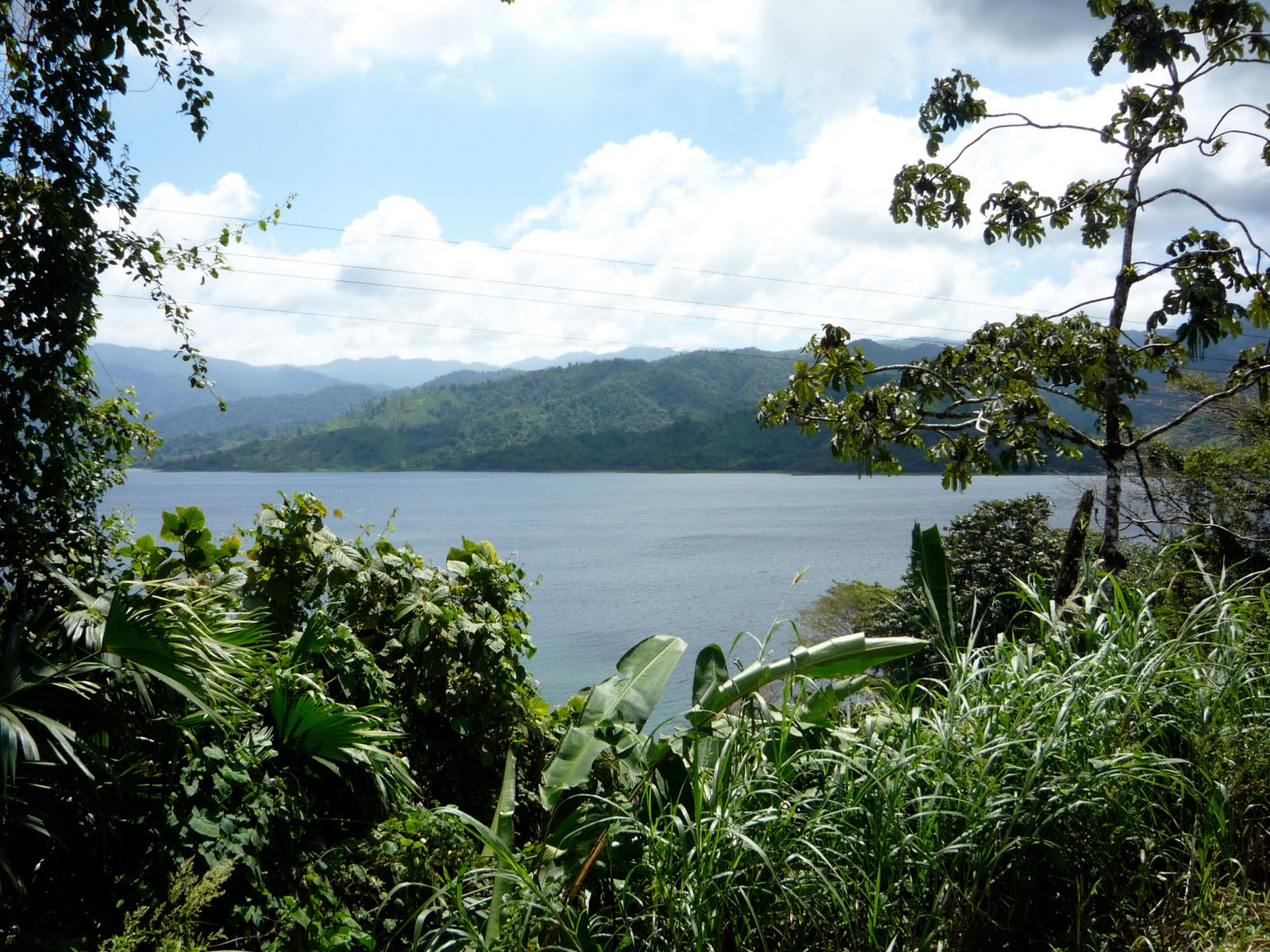
I’d like to nominate an obscure road that’s little known, but offers stunning views, natural charms, and expansive views of a lake, mountains and an active volcano: Costa Rica’s Lake Arenal Road.

Forming a half-loop around a 33-square-mile lake, the beguiling road and pastoral countryside through which it passes are becoming destinations. This in a country that boasts plenty of other flashier attractions such as rain forests, beaches, cloud forests and eco-resorts.

Linking the fabled cloud forest of Monteverde and monolithic Arenal, one of the most active volcanoes in the world, the road passes through a few sleepy villages, primeval rain forest, tidy farms, and verdant pastureland.

I first drove the meandering road in 1997, and upon each return—and turn—I find the route to be as scenic and inspiring as I’d remembered. And perhaps it gets even better with each passing year. While there are growing signs of discovery, with larger hotels sprouting on the lake’s southern shore and small housing developments popping up on its northern shore, the lake and the area surrounding it remain sleepy and full of both rustic beauty and cultivated charm.

A growing number of small restaurants and cafés have been built to capitalize on the inspiring, idyllic views and sublime air. Built with terraces overhanging hillsides which plunge toward the lake or open-air second-floors, the restaurants and cafés are difficult to resist. As I pass through I’m driven to stop and sit, sip a beer, coffee or fresh juice.

Arenal sits at 1800 feet which minimizes the tropical heat. And given the nearby mountains and Caribbean trade winds, the air is alive, creating an aerial playground for hawks and eagles and giving motion to stands of massive, emerald trees.

Windsurfers gather at the southwest part of the lake. Far above them on grassy hills, giant windmills generate clean energy for the area. Tree limbs, masses of electric-colored bougainvillea and ginger flowers nod and sway in the constant breeze.

There are no traffic jams, neon or stop signs. The place brings me back to somnolent summer days of childhood, when minutes felt as long as hours and time came close to standing still. Maybe vacations are designed to recapture the somnolence and quietude of those long-ago vacations or perhaps summer afternoons. Days stretch into eternity and there’s always a breeze and birdsong in the mornings.

The air here is sweet and fresh, redolent of the humid rainforest, sun-baked earth and grass. When I drove the road this past February, workers were grooming its shoulder and adding a fragrant whiff of fresh-cut grass to an already heady mélange of scents.

The area around the lake is the sort of place that is dream-like and you don’t even need to squint to visualize it. That's probably a good thing, since squinting and driving on such a curvy, undulating road isn’t exactly safe. And this road, albeit much improved in the past few years, still contains plenty of potholes and gravelly spots, so drive with one eye on the views and the other just beyond your dashboard.

Ideally, you should drive this route in a convertible, but these are hard to come by in a country with roads that sometimes more closely resemble rock-strewn riverbeds than paved highways. At the very least, though, you’ll want to unroll car windows—all the better to enjoy the sights, breezes and smells of one of the most beautiful drives in the world.

For non-luxe accommodations, but killer volcano & lake views & an Eden-like setting, check out the nearby Arenal Observatory Lodge which is a 30-minute drive from the eastern end of Lake Arenal.

 
Alan J. Shannon Copyright © 2020 | Home